FEATURED INVESTMENT / PRE-IPO
BIOSEN
From genetic innovation to lasting value.
Introducing BIOSEN: a life sciences platform connecting p53 gene therapy research, viral vector manufacturing and global collaboration.
- Years of technical experience
- 20+As described by the company
- Core technology focus
- p53Gene and cellular immunotherapy R&D
- Platform scope
- R&D → GMPResearch, process development and manufacturing
01 / COMPANY OVERVIEW
From a gene therapy product to an industrial platform
BIOSEN is a China-based gene therapy company. Its July 2026 materials describe proprietary drug research and CXO services spanning laboratory development, chemistry, manufacturing and controls (CMC), and a platform for large-scale GMP manufacturing. Gendicine (recombinant human p53 adenovirus injection) is a core product presented in the materials.
The materials also state that the production line described requires a GMP compliance inspection before formal sales can begin. Platform scope and designed capacity do not represent current output or revenue.
From a product to a gene therapy ecosystem
The presentation describes a progression from Gendicine-related experience to proprietary research, development services and international collaboration.
A technical and industrial journey
- 1998
Team begins gene therapy research
- 2003
Gendicine drug certificate reported
- 2004
Manufacturing development
- 2016
Core R&D and CDMO integration
- 2023
Production license reported
- 2025
Qianhai registration reported
Adapted from page 7, including predecessor-team and product history. This does not establish current license status or listing progress.
PRODUCT
A product foundation
The company describes more than 20 years of technical experience associated with recombinant human p53 adenovirus injection, spanning research, clinical studies, manufacturing processes and quality management.
PLATFORM
Research and CXO services
Proprietary gene and cell therapy programs sit alongside laboratory development, CMC and manufacturing support for partners, extending internal experience into a collaborative platform.
GLOBAL
International development
Regional licensing, drug substance supply, local filling and NewCo structures are proposed to connect Chinese technology with overseas registration, clinical development and commercialization resources.
ARCHIVE / RECOGNITION
Recognition & the historical record
Media coverage, scientific publishing and personal honors documented in the company’s presentation. These historical materials do not imply endorsement of the fund or this investment project.
TIME cover
A historical cover reproduced on page 7, themed around scientific innovation in Asia. Presented as a media record.
People’s Daily coverage
A gene therapy news clipping included in the company materials and labeled 2004 in the deck.
CCTV coverage record
A broadcast still and written record reproduced in the presentation and labeled 2003.
Founder recognition
Page 13 reports that Xu Wei received “Shenzhen’s Ten Outstanding Women Entrepreneurs” and “World Outstanding Chinese” recognition. These are personal honors; award dates and certificate images are not provided.
An adviser’s scientific achievement
Ada Yonath received the 2009 Nobel Prize in Chemistry and is listed as a scientific adviser. This is the scientist’s personal award, not a corporate award to BIOSEN.
Connecting fundamental science with translation
The materials describe scientific advisory and expert relationships across p53 research, tumor immunology, gene therapy and cell therapy. Roles and collaborations below reflect the presentation and have not been independently verified as current appointments.
Visit by Ada Yonath
A scientific advisory exchange documented in the presentation.
On-site exchange with Arnold J. Levine
A production-site visit recorded in the source materials.
Visit by Wu Zuze
An on-site expert exchange recorded in the source materials.

Ada Yonath
The 2009 Nobel Prize in Chemistry laureate is listed as a senior scientific adviser. The materials document a 2016 Shenzhen visit and exchanges related to the company’s CDMO platform.
Source presentation image · Source page 10
Arnold J. Levine
A co-discoverer of p53, described as a strategic adviser involved in scientific exchanges on p53 and antiviral research.
Source presentation image · Source page 10
Wei Yuquan
A Chinese Academy of Sciences academician working in cancer immunotherapy, gene therapy and targeted therapy. The presentation describes collaboration on expert consensus and translation.
Source presentation image · Source page 12
Wu Zuze
A Chinese Academy of Sciences academician with research in hematopoietic stem cells, genes and cells. The materials describe collaboration on a multi-gene adenovirus approach involving p53, B7-1 and GM-CSF.
Source presentation image · Source page 12Expertise across vectors, clinical research and production
Pages 13–14 introduce team members across research, medicine, statistics and manufacturing. The profiles below focus on their project-related expertise.

Xu Wei · Founder
Gene therapy industrialization experience, including Gendicine team and project development and subsequent programs such as p53-DCT.
Source presentation image · Source page 13
Diosdado S. Bautista · Chief scientist
An immunology background supporting p53-DCT, fundamental research, clinical study design and international scientific collaboration.
Source presentation image · Source page 13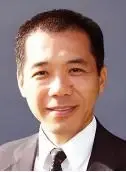
Zhang Weiwei · Founding scientist
Molecular biology and adenoviral vector expertise, including first-generation rAd5-p53 construction and subsequent vector engineering.
Source presentation image · Source page 13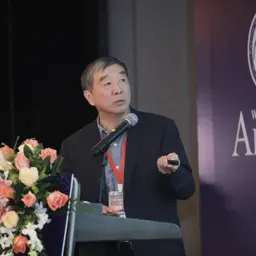
Li Dinggang · Clinical medicine
Work in cancer gene therapy, individualized multidisciplinary treatment and international clinical exchanges.
Source presentation image · Source page 13
Zhang Shuyuan · GMP and cell therapy
Adenoviral CDMO platform and GMP system development, alongside CAR-NK research responsibilities.
Source presentation image · Source page 14
Toshiro Shirakawa · Clinical collaboration
The materials describe a Kobe University clinical research background and collaboration on p53-based immunotherapy combinations and cancer vaccines.
Source presentation image · Source page 14
Gao Gui · Clinical research and statistics
Study design, clinical data analysis and coordination of investigator-initiated trial collaborations.
Source presentation image · Source page 14
Hu Aiguo · CMC development
Process design, quality control and industrialization, including the production platform for the first-generation product.
Source presentation image · Source page 14Gendicine: a p53-based gene therapy approach
Gendicine, recombinant human p53 adenovirus injection, is the presentation’s core product. The materials explain its foundation through the therapeutic gene, delivery vector and subsequent combination research.

Connecting the gene, vector and research
- Wild-type p53
- Engineered adenoviral vector
- Cellular expression research
Conceptual diagram based on page 17; not to scale and not a clinical efficacy illustration.
GENE
Therapeutic gene: wild-type p53
The materials describe delivery of wild-type p53 and its role in studying tumor-cell cycle regulation and apoptosis. A mechanism of action does not establish efficacy across all cancers.
VECTOR
Delivery: modified adenovirus type 5
An engineered, replication-deficient adenovirus serves as the delivery vector. The presentation emphasizes non-integrating, transient expression; product safety and use remain subject to approval documents and clinical evidence.
TRANSLATION
Research: combinations and delivery routes
The deck brings together studies involving radiotherapy, chemotherapy and cellular immunotherapy, alongside exploratory aerosol delivery. Study stage, disease setting and evidence strength differ across approaches.
Clinical research and exploratory indications
Pages 19–45 cover long-term follow-up, phase IV studies, meta-analyses, trial registrations and exploratory work. These are grouped by evidence type without combining heterogeneous studies into a single efficacy claim.
Research at a glance
10 randomized controlled studiesPPT 29
8 randomized controlled studiesPPT 30
10 randomized controlled studiesPPT 31
Sample sizes for three meta-analyses described in the deck. Bar length represents patient count, not efficacy. Counts are not pooled or added together.
Human Gene Therapy publication
A journal cover reproduced on page 16, presented as a literature reference rather than independent confirmation of current product efficacy.
PP. 19–28
Head and neck / nasopharyngeal research
The deck presents early laryngeal research, long-term nasopharyngeal follow-up and a phase IV advanced nasopharyngeal study described as having 1,200 evaluable patients, examining response and follow-up after combination treatment.
P. 29
Malignant pleural effusion meta-analysis
The presentation lists 10 randomized controlled studies with 538 patients comparing gene therapy plus cisplatin with cisplatin alone. This is a literature synthesis, not a single new BIOSEN trial.
P. 30
Radiotherapy combination meta-analysis
Eight randomized controlled studies with 334 patients are listed, comparing rAd-p53 plus radiotherapy with radiotherapy alone. Interpretation must account for disease, protocol and follow-up differences.
P. 31
Cervical cancer combination meta-analysis
Ten randomized controlled studies with 487 patients are listed, involving gene therapy with radiotherapy or chemoradiotherapy. These combinations should not be treated as a single treatment protocol.
P. 39
Trial registration references
References include NCT00894153 for head and neck tumors, NCT02418988 for liver cancer and NCT02429726 for malignant pleural effusion. These identifiers are pointers to original records, not confirmation of current recruitment or completion.
PP. 41–45
Exploratory research
Exploratory directions include a single-arm aerosol delivery study for pulmonary ground-glass nodules, a TP53-mutated solid-tumor basket approach and melanoma research. These are not presented as approved indications.
Study descriptions and sample sizes are from the company’s deck; original publications and registrations have not been individually verified. High response claims lacking full study context and cross-drug or cross-disease superiority comparisons are not reproduced.
Five areas of CDMO support
A viral-vector-centered service model connects research, processes, quality and facilities. The scope follows pages 46–50; actual capabilities and delivery terms require project-specific agreement.
Viral vector manufacturing
Vector amplification, purification, formulation and production support to connect laboratory research with manufacturing.
Process development and optimization
Project-specific CMC design, scale-up and optimization, with attention to yield, purity, consistency and process transfer.
Quality and regulatory support
Support for quality control, quality assurance, analytical methods and regulatory documentation, connecting research data with development requirements.
Facility commissioning and training
Facility setup, equipment commissioning, technology transfer and staff training to support local manufacturing capabilities.
Multi-platform collaboration
The deck discusses adenovirus, AAV and lentiviral approaches. Vector selection depends on target cells, expression duration, delivery needs and safety requirements; no route is treated as universally superior.
Connecting research with manufacturing
Viral vector capabilities across key stages of gene therapy development and production.
- 01
Research & vector design
Therapeutic genes, viral vector construction and laboratory research.
- 02
CMC development
Amplification, purification, formulation and process optimization.
- 03
Quality & manufacturing
Quality control, quality assurance and GMP manufacturing platform development.
- 04
CDMO services
Process development, manufacturing support and technical services for partners.
From cell banks to finished product
- 01Cell / virus seed banks
- 02Bioreactor expansion
- 03Purification
- 04Formulation
- 05Filling
- 06Packaging
Process outline adapted from page 49. Quality control (QC) and quality assurance (QA) span the process.
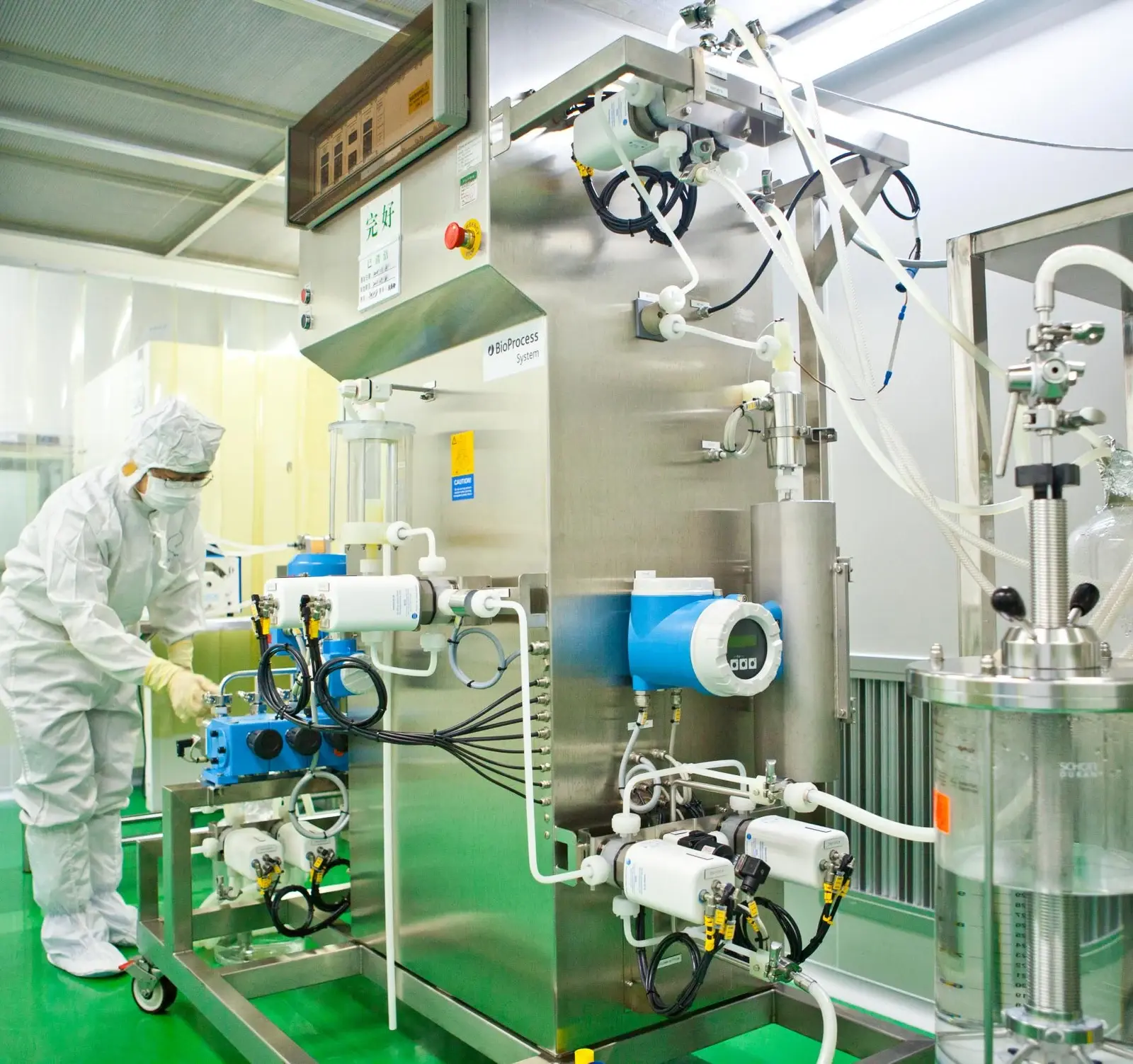
Bioreactor & production equipment
Production facilities as shown in the presentation.
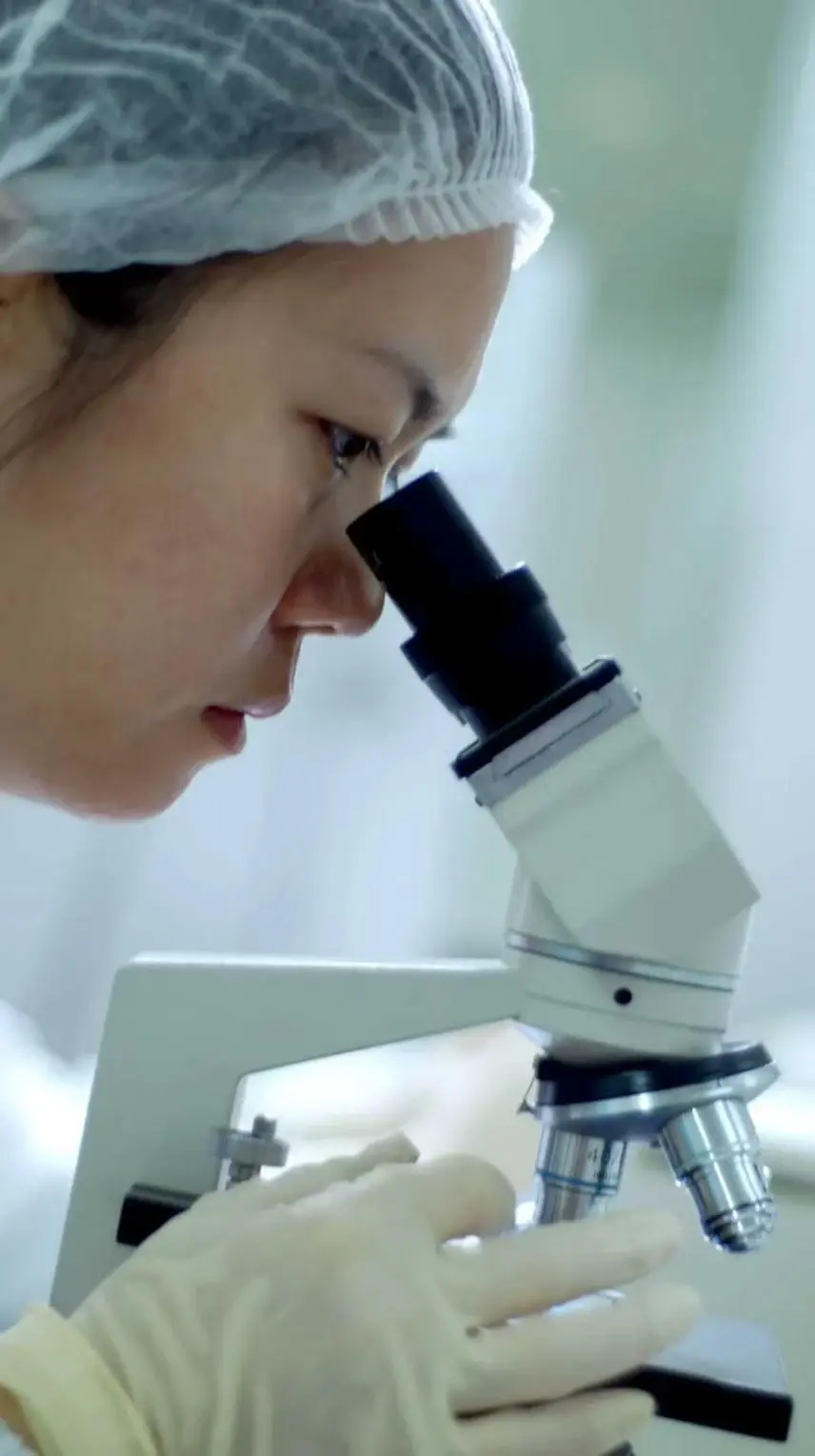
Laboratory analysis
Laboratory research imagery from the presentation.
Production operations
Production personnel and equipment pictured in the presentation.
The laboratory team
Laboratory work documented in the presentation.
Exploring gene and cell therapies
Stages below reflect company materials dated July 2026. Research findings do not establish approved indications or proven clinical efficacy.
Evidence now. Proposed next steps.
- p53-DCTResearch describedIn vitro + animal studiesProposed next stepIIT / combination study plans
- CCR5-Δ32Research describedConstruction + preclinical researchProposed next stepClinical research planned
- CAR-NKResearch describedPreclinical / patents reportedProposed next stepOff-the-shelf therapy development
- Liver cancer vaccineResearch describedPreclinical / application reportedProposed next stepPersonalized immunotherapy research
Solid boxes show reported research; dashed boxes show research directions or plans, not completed regulatory stages. Source date: July 2026.
| Program / technology | Research focus | Stage described |
|---|---|---|
| p53-DCT | Research combining gene therapy with DC-T cellular immunotherapy | Experimental studies / clinical planning Materials show in vitro and animal studies, with subsequent investigator-initiated trials planned. |
| CCR5-Δ32 | HIV gene therapy research using a non-replicating chimeric viral vector | Preclinical research The company reports completed drug construction and preclinical research, with clinical work planned. |
| CAR-NK | Off-the-shelf universal cell therapy | Preclinical The company reports that relevant patents have been granted. |
| Liver cancer vaccine | Personalized immunotherapy research for primary liver cancer | Preclinical research The company reports a submitted patent application. |
p53-DCT
Research combining gene therapy with DC-T cellular immunotherapy
Experimental studies / clinical planningMaterials show in vitro and animal studies, with subsequent investigator-initiated trials planned.
CCR5-Δ32
HIV gene therapy research using a non-replicating chimeric viral vector
Preclinical researchThe company reports completed drug construction and preclinical research, with clinical work planned.
CAR-NK
Off-the-shelf universal cell therapy
PreclinicalThe company reports that relevant patents have been granted.
Liver cancer vaccine
Personalized immunotherapy research for primary liver cancer
Preclinical researchThe company reports a submitted patent application.
Four programs, distinct research paths
Beyond the stage summary, these profiles explain each program’s approach, research objectives and proposed next steps, as described in July 2026.
p53-DCT: original laboratory and animal study charts
Left: in vitro cell-killing experiment. Right: tumor-bearing mouse experiment. Original axes, groups and legends are retained. These are preclinical findings, not evidence of human efficacy.
p53 + DC-T
Chizecine · p53-DCT
Combines p53 gene therapy with dendritic cell–T cell immunotherapy research. The deck shows in vitro and animal experiments and proposes IITs, basket studies and combinations with radio/chemotherapy or checkpoint inhibitors. Laboratory and animal findings do not establish human efficacy.
CCR5-Δ32
Aibine · CCR5-Δ32
A non-replicating chimeric viral vector approach to HIV research involving CCR5-related mechanisms. The company reports completed construction and preclinical research, with cell findings under different experimental conditions. Clinical work remains planned; the program is not described here as a proven HIV cure.
CAR-NK
Universal CAR-NK
Preclinical development of off-the-shelf cell therapy, with granted patents reported by the company. Targets illustrated include CD19, BCMA, CD22 and mesothelin. A target illustration does not establish an equivalent number of approved or clinically validated products.
CANCER VACCINE
Personalized liver cancer vaccine
Personalized immunotherapy research for primary liver cancer, targeting postoperative recurrence prevention and control of advanced disease progression. The materials describe preclinical research and a patent application. These are research objectives, not established clinical benefits.
Connecting platform capabilities with new markets
The company proposes partnerships built on its technology, products and manufacturing capabilities, subject to local registration and commercialization requirements.
Regional licensing
Regional partners undertake local development, registration and commercialization, supported by company data and technical expertise.
Drug substance supply
Drug substance supply and local filling connect production capabilities and quality systems with regional markets.
NewCo partnerships
Technology licensing and joint venture structures provide another route. Company materials describe a Singapore collaboration.
Channel 4 filming visit
Workshop filming identified on page 37.
INTAS delegation visit
A company exchange in the source materials; a visit does not establish a signed commercial agreement.
Scientific exchange meeting
A meeting photograph associated with Ada Yonath’s visit in the source materials.
Pharmaceutical R&D forum
The source identifies Zhang Weiwei’s participation in a pharmaceutical R&D forum.
From licensing to local delivery
Pages 61–65 distinguish regional product partnerships from early-stage pipeline licensing. Payment components describe proposed transaction structures, not cash received or recognized revenue.
Connecting technology, production and regional markets
BIOSEN
Technology / substance / quality
Regional partner
Registration / filling / commercialization
Local market
Subject to local requirements
Model adapted from pages 61–65; not confirmation of completed transactions or realized revenue.
The company’s contribution
The regional model includes drug substance supply, registration dossiers, production guidance and quality standards, with relevant IP retained. Territory and rights depend on the specific country, region and agreement.
The local partner’s role
Local registration, marketing, sales and after-sales support, together with appropriate local GMP filling resources. Filling arrangements must meet company quality and local regulatory requirements.
Regional product economics
The materials outline upfront payments, registration or sales milestones, royalties and drug substance supply, combining technology licensing with an ongoing supply relationship.
Early-stage program licensing
The company supplies preclinical and early data plus continuing R&D support; partners fund regional clinical development, registration and commercialization. Upfront and development milestones track progress. Third-party pharmaceutical deals in the deck are industry examples, not completed BIOSEN transactions.
Next steps in production, research and international development
Adapted from pages 68–69, retaining the source date and prerequisites. Designed capacity, planned milestones and negotiations are not realized operating outcomes.
GMP / CAPACITY
Gendicine manufacturing plan
The described production line has a designed capacity of one million vials annually, with formal sales conditional on a GMP compliance inspection. Capacity is not converted into revenue or unverified sales and profit forecasts.
2026 → 2027 / PLAN
p53-DCT translation plan
The July 2026 deck proposes an end-2026 filing, IIT and clinical translation work in 2027, and ten gene medicine centers with tertiary hospitals. These are plans at the source date, not confirmation of completed filings, studies or centers.
SINGAPORE / NEWCO
Singapore NewCo case
The company reports an arrangement with Singapore’s ABL involving a technology-licensed NewCo and a stated equity interest of at least 19.9%. Plans cover local registration, clinical development, marketing and gene medicine centers in Singapore and Hainan. Rights, performance and progress require review of formal agreements.
REGIONAL DEVELOPMENT
Other regional discussions
The deck mentions discussions concerning the US, Hong Kong, India, Malaysia, Vietnam and Bangladesh. These indicate proposed market development, not completed licenses or commercialization.
Where science, industry and markets meet
A long-term capital perspective on platform capabilities, research potential and international collaboration.
Product and manufacturing experience
Experience associated with Gendicine provides a basis for examining vector construction, process development, quality control and production—and how these capabilities translate into operating results.
Proprietary R&D and development services
A proprietary research pipeline sits alongside CDMO services, pairing the study of new therapies with development and manufacturing support for other gene therapy projects.
Chinese innovation, global collaboration
The company outlines regional licensing, drug substance supply and NewCo partnerships as possible routes for international development and local commercialization.
Start a conversation about life sciences
Contact our investment team to learn more about BIOSEN and SKYW’s Pre-IPO investment focus.